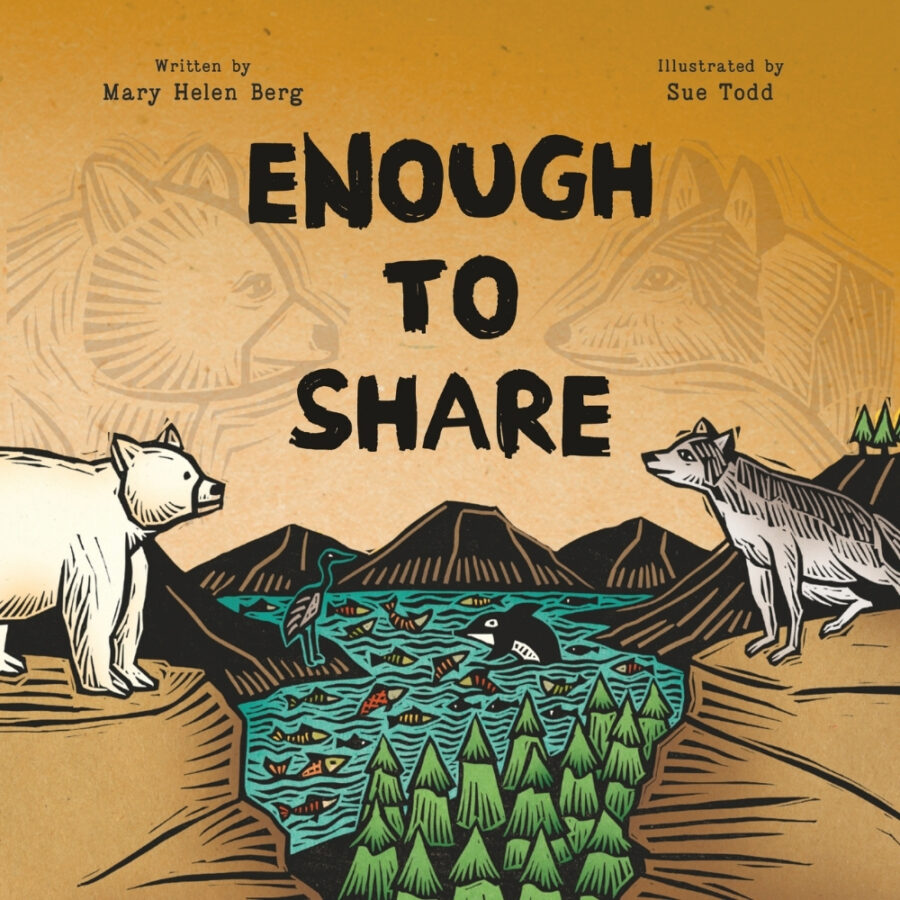
ENOUGH TO SHARE
Welcome to the blog, Mary Helen!
I’m excited to celebrate the release of your debut picture book, ENOUGH TO SHARE, by learning more about how it came to be. Illustrated by Sue Todd and published by Tielmour Press on May 26th, 2026, this beautiful book about how climate change impacts the environment we all share is one to check out.
***
A bit about ENOUGH TO SHARE:
What happens to a swimming wolf and a ghostly bear when there is less and less to share? For thousands of years, Spirit Bear and Sea Wolf have shared the misty woods and rocky shores of the beautiful Great Bear Rainforest, but now climate change and dwindling resources jeopardize their fragile world and they must compete for food, space, and clean water, putting their survival at risk. ENOUGH TO SHARE tells the story of two real, rare animals whose way of life in the beautiful Great Bear Rainforest is threatened, and offers a gentle but powerful message: our world is a gift that we must all share.
***
Now on to our interview:
M. Mary Helen congratulations on your debut picture book! It’s beautiful! I’m so happy for you and for this chance to celebrate together. Can you share what inspired you to write this story? Why the focus on Spirit Bear and Sea Wolf?
MH. Thanks so much for hosting me on the blog, Mariana! I’m excited to tell your readers more about ENOUGH TO SHARE. The idea for this book began with a National Geographic magazine article I read about sea wolves. A swimming wolf? I’d never heard of this fascinating animal, or their home, the Great Bear Rainforest. As I researched, I learned about another animal that lives there, the spirit bear, and about the incredible beauty and fragility of the rainforest. I realized I had two great characters, a spectacular setting, and a real life conflict. I found very few other picture books about this amazing place, so I wanted to introduce readers to the Great Bear Rainforest and two of the rare animals there. I chose to focus on Sea Wolf and Spirit Bear because they are iconic creatures in the region, but also, because they are apex predators who have survived side by side for thousands of years and are only now threatened due to human causes. Part of the message of the book is that if these predators can share their world, we can learn to share it too.
***
M. That’s a wonderful story and such a good example of how inspiration is really everywhere around us. Can you tell us where your interest in nonfiction stories comes from?
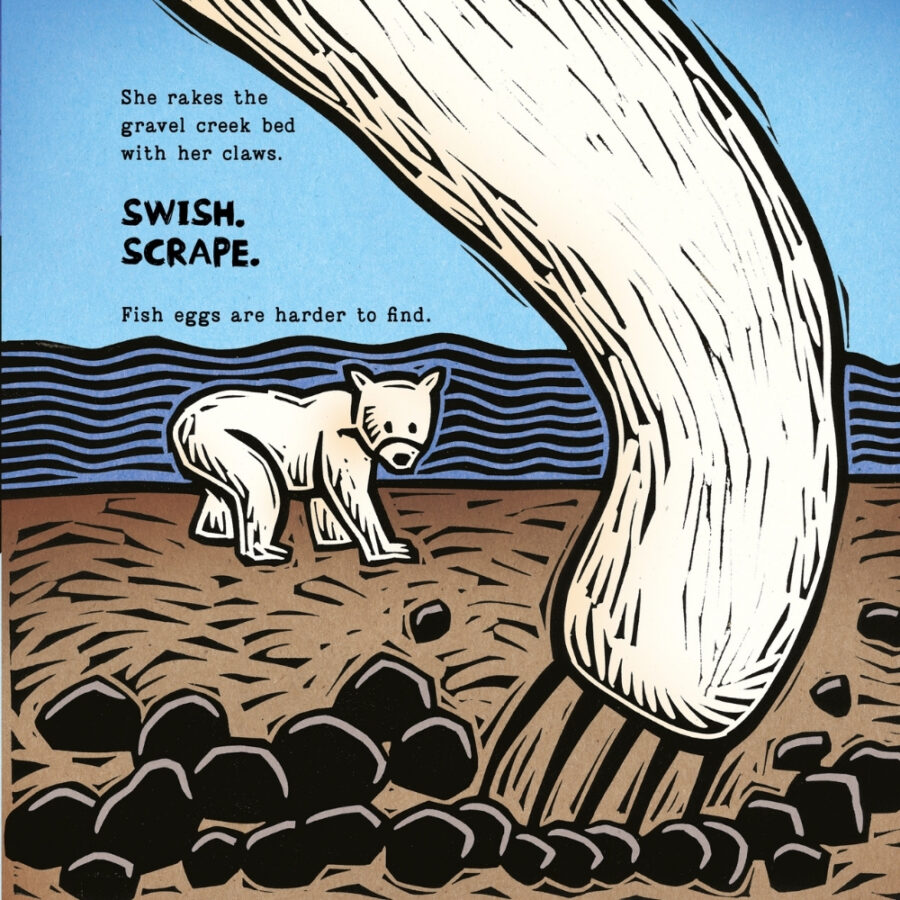
MH. I love nonfiction because it gives me an opportunity to share information about the world that I find fascinating. When I learn about something new and think “What?? WOW!”, I always wonder if there’s a way to write a picture book about it. Including nonfiction facts within a story is a painless way to introduce information, and a fun way to learn, I think. Also, my background is in journalism, so I have researched and written nonfiction in another form for many years.
***
M. I haven’t written any nonfiction story yet, but it seems to be a very interesting learning experience and how cool that you have that background in journalism! I’m sure you’ve loved using those sets of skills for writing this book. Can you tell us what was the research process you followed for this story?
MH. As I mentioned, it started with one article. From there, I began looking for any and all information I could find to learn more about the rainforest. This included reading adult books, picture books, newspaper articles, studies about salmon, bears, and the rainforest. I tried to learn more about the Coastal First Nations people and their relationship to the rainforest, the political alliances that were built to protect it. I didn’t have a chance to travel to the Great Bear Rainforest, so I tried to get a sense of the sights and sounds of the ecosystem by watching a documentary, and looking through tons of video clips and photos. Most of this information isn’t actually in the book! But it immersed me in that world, and gave me context so I could try to represent the rainforest and its creatures in an authentic way.
***
M. Thank you for sharing your process, it really gives us an idea of the time and hard work that goes into creating nonfiction books. Through your extensive research, you surely discovered many cool facts about your characters and their habitat. How did you decide which pieces of information to include as notes on the pages and what to have as back matter?
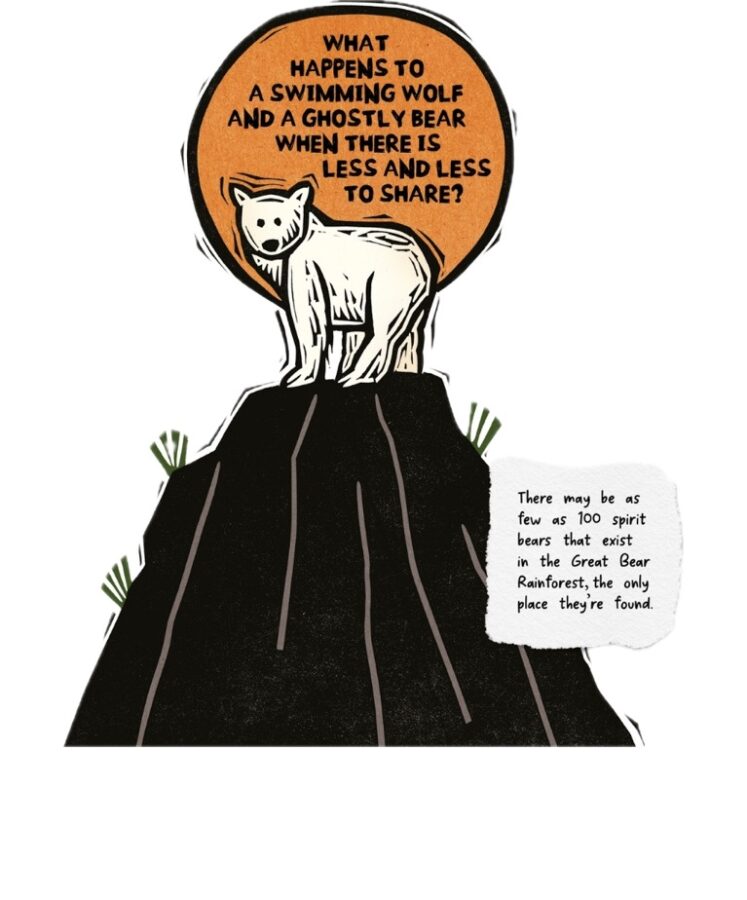
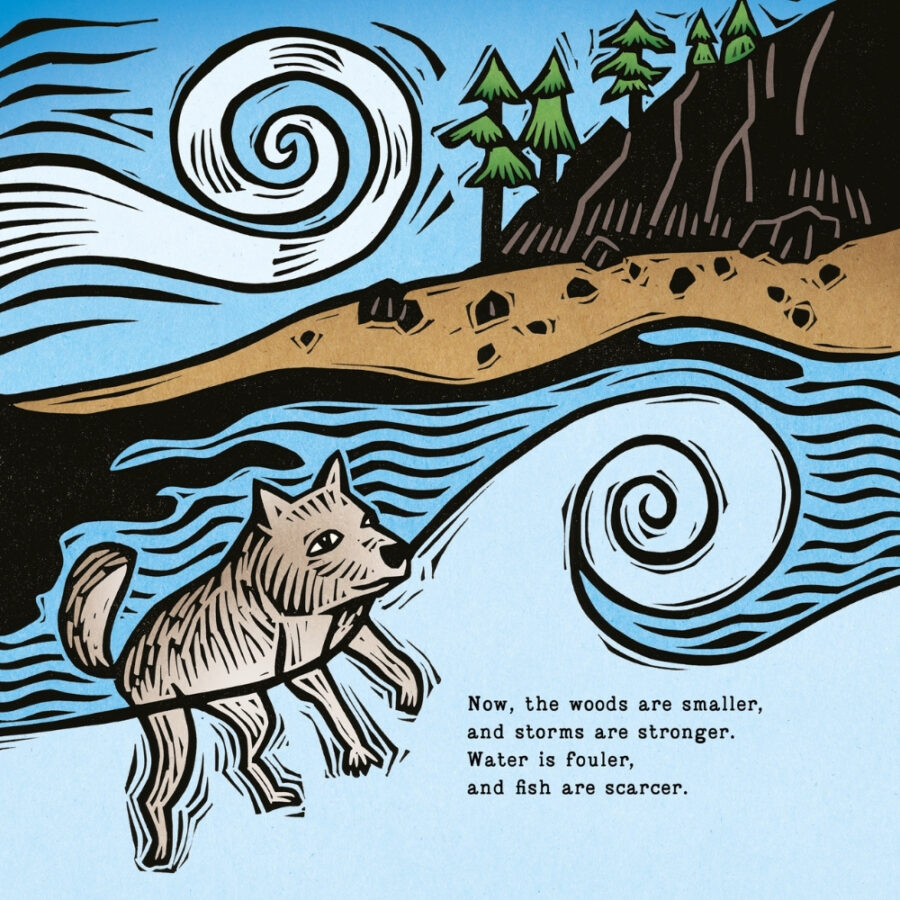
MH. The notes on each page, or the sidebars, are meant to provide extra context or additional facts to support the story text on that page. So each one is specific to the illustration and text on that particular page. They also offer another level of learning for older readers. The story is nonfiction, in the sense that there is nothing fictional that happens within it, but the text itself is lyrical and reads like a story. For example, there’s one part where the story says that sea wolf is digging for clams, and his “paws turn dark and sticky.” But the lyrical text doesn’t explain why. The “Why” is found in the illustrations and in the sidebar, which explains that an oil tanker ran aground in the Great Bear Rainforest and spilled 25,000 acres of oil, contaminating the clam beds where sea wolf digs for food. The back matter offers more of an overview, with general facts about the sea wolf, spirit bear and Great Bear Rainforest, as well as suggestions on how readers can help protect the environment.
***
M. In your back matter, you include a special thanks to a conservation scientist who reviewed your text for accuracy. How did you approach that and why did you think it was important?
MH. ENOUGH TO SHARE is my debut picture book and to be honest, I was nervous about reaching out to an expert to ask them to review the book! But because the book is nonfiction, I felt it was critical to make sure it was accurate. I feel a huge responsibility to present correct information to young readers. I came across the work of Dr. Chris Darimont, a conservation scientist and the Rainforest Chair of Applied Conservation Science Lab in the Department of Geography at the University of Victoria, British Columbia. My research showed that he’d spent a lot of time in the Great Bear Rainforest and published studies documenting issues there. I reached out to him by email and he very kindly agreed to read the manuscript. He was able to offer specific suggestions that brought our information up to date and made me feel comfortable that the book offered an accurate representation of the animals, the rainforest and the challenges there.
M. That’s wonderful! How exciting that he helped you make the book even stronger. I’m sure that you felt more confident with his feedback and suggestions, knowing that what you were including in the book was accurate. That is such a good tip for all nonfiction writers. Thanks for sharing!
***
Mary Helen thank you so much for sharing your process for researching and writing a nonfiction story, it was very enlightening and interesting. I wish you the best with ENOUGH TO SHARE. May it find many readers who are excited about learning more about these unique animals and how we can all make a positive impact in the environment we share with all the species on Earth.
MARY HELEN’S BIO
***
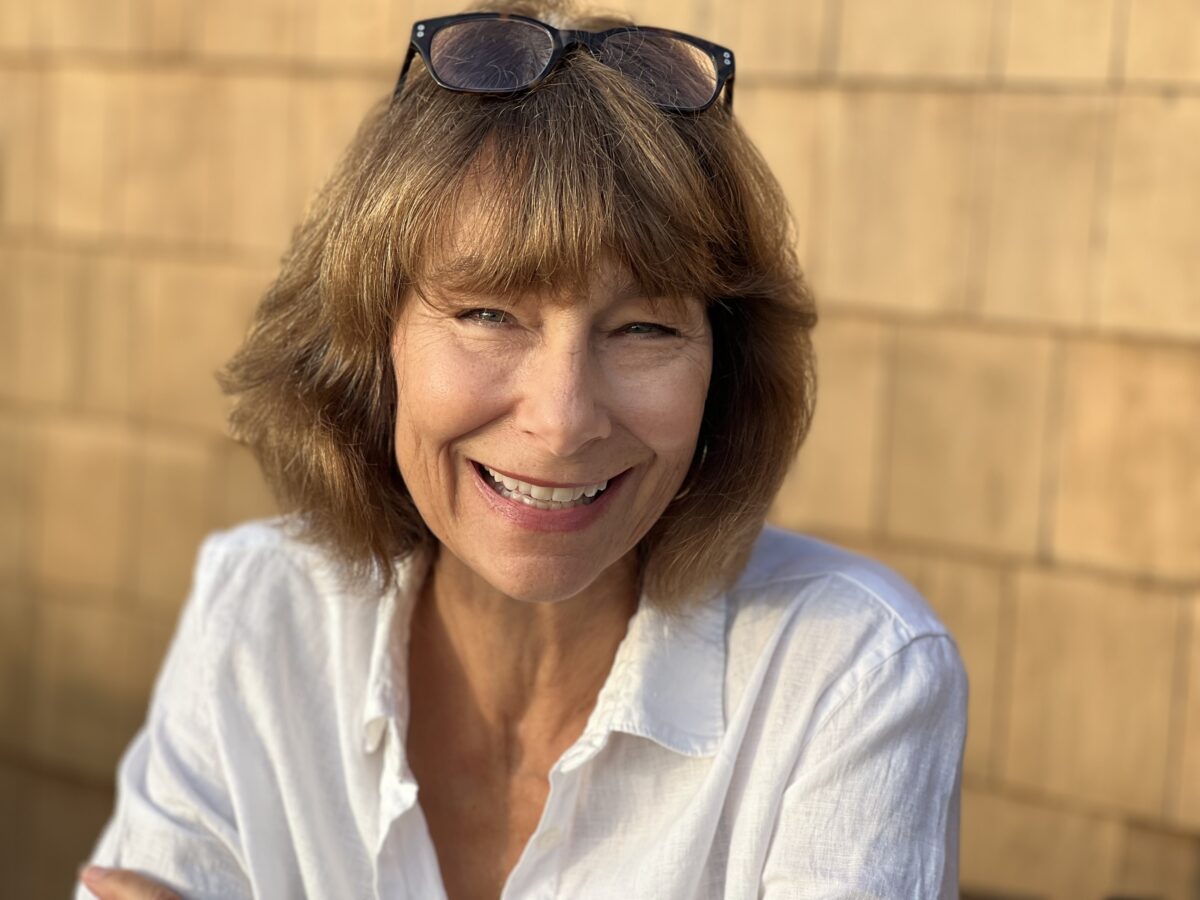
Mary Helen Berg writes fiction and nonfiction picture books that honor big feelings and inspire young readers to explore and protect our big beautiful world. A former journalist, she lives in Southern California, where she loves to hike, bike, kayak, and road trip. She has a degree in literature from the University of Michigan, and a masters in journalism from Columbia University. She and her husband have three grown children, one son-in-law, and one very anxious dog. ENOUGH TO SHARE is her debut picture book.You can find out more on her website:
https://maryhelenberg.com/
https://www.instagram.com/maryhelenberg.
***
Interested on buying this book?
Thanks for reading!
M
PS. Remember you can subscribe to my newsletter by clicking the pink button. Thanks!
Cover photo by Alex Maksin.